Route map

Route map
Route map 2008-2014

Riding days

Riding days
Showing posts with label Japanese Alps. Show all posts

Sunday, 4 September 2011

72. Over an Alp

Leaving Matsumoto last weekend and waving goodbye to Jim and his family, who had hosted me for an evening, I stopped to fill my water bottles up at a spring in the lane behind his house, beside the local saki brewery. The night before, over a tetra-pack carton of Japan's finest (and the cheapest we could find in the Seven Eleven) I asked Jim, a twenty-two year veteran of cheap saki what the secret was. "They say it's in the water", he said, staring into his glass.

My goal for the next couple of days was to be the literal high point of the northern Japanese Alps as I climbed up and over the Norikura Skyline road, the highest pass in Japan at 2720 metres, and which is a largely car-free road for 40 kilometres over the summit of the granite batholith with only shuttle buses and taxis being allowed on the route through the Chubusangaku national park. 

Weekend traffic was surprisingly busy on the narrow route approaching the turn and the long, narrow tunnels that had been built during the Second World War were at times a little unnerving. I was relieved to reach the turn off for the small tourist settlement of Norikura village and I expected the traffic to thin out as I left the main route but as indicators came on it seemed like everyone was heading the same way and everyone had a bicycle with them too. It turned out that I had arrived along the afternoon before a famous annual bike race that would see over 4,000 cyclists race the last 20 kilometres from Norikura village (1200m) to the top of the pass. The top amateur and semi-professional cyclists were gathering from around the country to participate. Most of the guys I spoke to initially assumed I was some sort of comedy entry. When they realised I had no intention of paying 8000 yen to climb a hill and come paddy-last they explained that the road would be closed for most of the following morning for the race but I could pitch the tent up in one of the fields where competitors were parking and pitching their tents or preparing their bikes for the race the next day.

The following morning I watched the riders set off at intervals in groups of several hundred up the rain-soaked road. As the sun came out and dried the road and the tent I packed up and decided to see if I could pedal up behind the last group rather than wait another few hours until the route opened again officially. I was sure I would draw the wrath of the normally gracious baton-waving traffic controllers but a smile and a look of sympathy at the martyr who they seemed to assume was just a very late entry and off I went. Three hours later (not including rest stops) I crested the summit, having had all 4000 entrants pass me on their  descent to the village, any signs of the mornings event were packed up and long gone. Someone told me the king of the hill had managed to achieve victory in just over 55 minutes. 

Mixing with the young and ancient who had bussed it up to come to climb one of the surrounding peaks, I put a fleece on for the first and only time in August and left Rocinante by the bus stop as I joined some recent arrivals and plodded up to the nearby peak of Maou-dake. Back on the bike and I descended the 60 kilometres to the historical centre of Takayama in the late afternoon, stopping just once outside a shrine in a picturesque village where the old lady that I was sharing the bench with, shuffled into the nearby shop to return with a bottle of Pocari Sweat, Japan's favourite sports drink. I continued on to Takayama and made my way to the local park just as the rain started and found a covered bench where I planned to spend the night. An hour later a group of eight university students cycling from Osaka up to Niigata arrived along with headlights flashing, as surprised to see me as I was them and we shared the space for the night, swatting blindly about for mosquitos as we fell asleep.

Osaka, Japan
Trip distance: 49,033 km

Thursday, 25 August 2011

71. Wasabi weather


After two days of waiting for a break in the rain, I finally left Tokyo at midday on Monday after a quick visit to the Japan Post office. I had decided to relieve Rocinante of a few extra kilos of odds and ends that my panniers had inherited when we had packed Ellie's gear up and which I wouldn't need in Japan and I sent them to Anita, a Canadian teacher in Fukuoka, who had kindly agreed to mind them for me. The lady in the post office wanted me to write the address in kanji at first, which I started copying from the piece of paper where Sparky had written it down. Halfway through what I thought was an admirable, if somewhat infantile attempt, the lady frowned at my illegible artwork and decided I best just use the Roman letters.

Escaping Tokyo on a bicycle, like many large cities, is not as difficult as it might seem. There were a number of options including several bike routes following the main rivers, a perfect way to get up to the cooler mountains to the west and I was able to photocopy some detailed bicycle maps which Yukiko had lent me. With the rain delay and more forecast I had already abandoned the idea of a northeast detour to the shrines and temples of Nikko as the prospect of camping wet and wild (not the cool kind) wasn't appealing given how hard it is to dry the gear out again unless the sun makes a guest appearance through the overcast sky. So with some last minute futon-surfing requests I had places to stay for the first couple of nights.

I took the busy Route 311 for 20 km from Sparky's apartment in Setagaya and headed north to get on the Arakawa river route, with only one collision when I misjudged the mind of an old, possibly drunk man, who weaved into me just as I came up alongside him. Once I found the pathway that ran along the top of the southern levee that kept the Arakawa river separate from the adjacent properties on the floodplain, I was soon out among rice paddies and golf courses.

Fifty kilometres upstream I came to Kumagaya city and stopped for the night with an American couple, Eric and Kyde, who had moved to Japan last May. Like many native English-speaking gaijin (foreiners) working in Japan, Kyde is an ALT (assistant language teacher) who works alongside local Japanese teachers during English lessons. In the immediate aftermath of the recent disaster an estimated half million foreigners left Japan, leading to the somewhat disparaging term of 'flyjin' being coined. After a great evening with Eric and Kyde and their friends, I left a drizzily Kumagaya and switched over to the Tone river and headed up to Takasaki city. I stayed with another couchsurfing host, Jaimie, and had a great night there as well. Sunset in Honshu at the moment is just before 7pm so it will be an early night in the tent. There are plenty of camping options though along the river banks and in quiet corners of public parks.

Yesterday I left the flatlands and began the first of several days crossing the Japanese Alps. After about 12 km climbing and 184 corners along the densely forested Route 18 I reached Usui Pass (1203m), which has been an important route across central Japan since the 8th century. A few kilometres on I came to Karuizawa and sweated my way up some more hills to Hiromichi and Yukiko's mountain house in the forested slopes above the town where friends of Yukiko, Tomohiso and Koji, welcomed me in. Both of them are doing day and night shifts in front of their laptops writing up their PhDs. Koji had four historical tomes beside him, each in a different language and three different alphabets - Russian, French, English and Japanese. We stayed up late, fixing the world over a beer.

Today it rains. I have found a shorter route over the mountains to Matsumoto which I plan to take tomorrow and will make it in one day rather than two. So today I can walk downtown and keep an eye out for the emperor who is in town apparently.

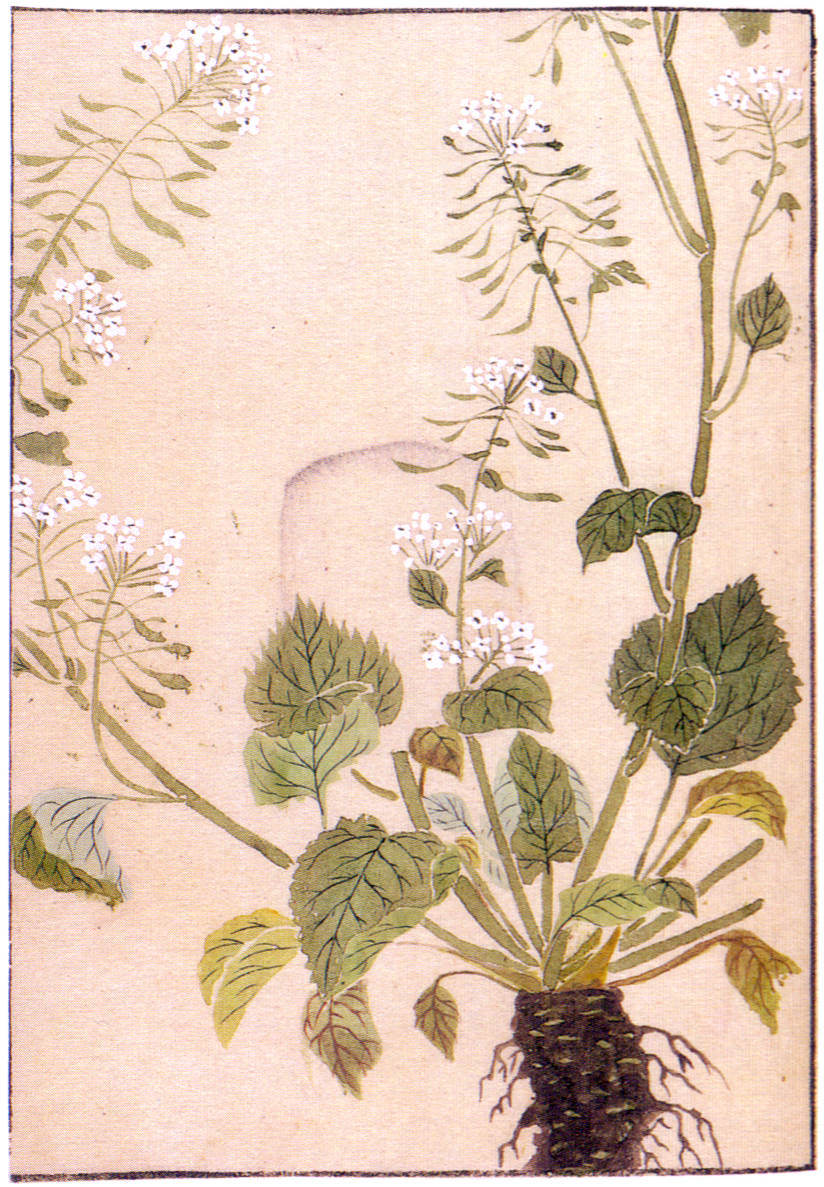
My favourite condiment here -Japanese horseradish, or wasabi - grows best in the stream beds of the nearby mountain valleys of central and northern Japan although these days the country has to import a lot to meet the high demand. Outside of Japan, what is often passed off as wasabi is in fact a mixture of regular horseradish, mustard and green food colouring which is much cheaper to produce and a lot less subtle. Traditionally the wasabi root was grated on a piece of dried sharkskin although these days ceramic is often used. Recent research has found a number of health benefits from setting your nasal passage on fire including anti-cancer, anti- inflammatory and anti-bacterial properties. So pile it on!

On the far side of the hemisphere Ellie's splint came off yesterday but it still may be a couple of months before she'll be cycling on it without pain.

Karuizawa, Japan
Pedalled: 48,416 km