Route map

Route map
Route map 2008-2014

Riding days

Riding days

Sunday, 10 February 2013

108. A second New Year in Kunming


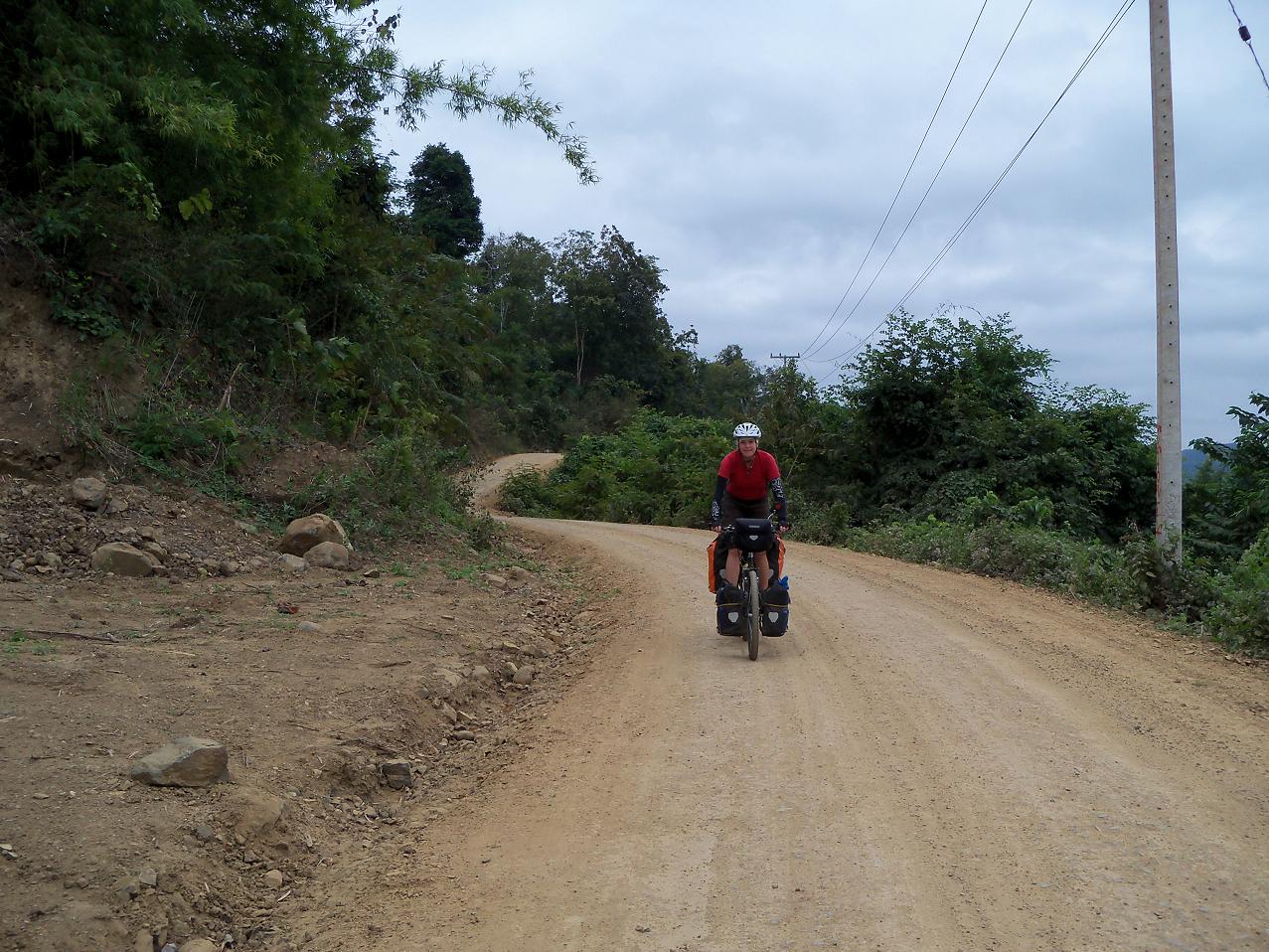
We had entered China before we'd even left Laos. Boten special
economic zone straddles the border and was built by the Chinese. It
looks like China. The street signs, the shops, the policemen, the
concrete apartment blocks. Chinese truck drivers were already forming
a queue before the Lao immigration windows opened for the day. By nine
thirty we were through both Lao and Chinese immigration and apart from
a cursory inspection by a serious young Chinese customs officer of our
passports, we were waved into China's Yunnan province.

We followed the main highway to Mengla, the road so wide at times it
resembled a runway. Laos is small scale. Little of small-scale China
remains. Agriculture is a serious business this side of the border.
Polythene wrapped fields, valley floors covered with protective
netting, along with prolific use of the latest modern wonder
chemicals. Bananas grew cocooned in large blue plastic bags and were
kept insulated from the winter chill with white foam wrapping. All of
which gathered in small mountains of rubbish piles along the roadside.

For many centuries Yunnan lay beyond the reach of the feudal states
and then empires of the Middle Kingdom. Thant Myint U describes Yunnan
as "China's wild southwest. It was a land of outlaws and miscreants
and exotic religious sects, a place where musket-slinging Han settlers
battled bow and arrow-wielding tribesmen and aliens from beyond the
pale. Its jungle-clad mountains teemed with fearsome animals and its
torrential rivers, thousand foot cliffs and deadly miasmas deterred
all but the hardiest of frontiersmen." The jungle has for the most
part been replaced by cash crops and plantation trees and many of the
rivers have been dammed for hydropower to feed the nation's insatiable
appetite for energy. Still some pockets remained and we spent several
days following the quiet backroads northwards from Mengla to
Jiangcheng, through the Dai villages - now a hotch-potch of
traditional wooden houses and generic concrete boxes. The road wound
mercilessly over the mountains that dominate the province. This is
China's most ethnically diverse and biodiverse region and home to some
of Asia's major rivers - the Irrawaddy, the Mekong, the Yangtze and
the Pearl rivers all pass through the province on their way down from
the adajacent Tibetan plateau.

Occupying a pivotal position with its international borders to south
east Asia and in particular Burma and a coveted supply route to the
Indian ocean, the province has become of prime importance in the
country's development policies. The old city of Kunming where we
arrived a couple of days ago has been razed to the ground in the past
twenty years and replaced with a modern skyline and yet remarkably
devoid of inhabitants. It's the Spring festival - the Chinese New Year
- and the largest annual human migration is taking place. Over 200
million Chinese are returning home - mostly migrant workers from the
cities to their rural homelands, often a trio of father, mother and
child on a motorbike. Most businesses are closed and fireworks blast
away in fresh nighttime air. Strong winds blow away any pollution and
visitors from northern smog-bound cities are astounded that they can
see the stars in this 1900 metre high metropolis of 6 million people.

Kunming, Yunnan, People's Republic of China
Pedalled: 67,188 km

Thanks to more donations, we're almost at the first thousand - 992
euros have been raised so far for the Peter McVerry Trust. Donations
can be made via my webpage on mycharity.ie -
www.mycharity.ie/event/julian_bloomer_the_slow_way_home

Saturday, 26 January 2013

107. Last days in Laos

 Our wonderful hosts in Luang Prabang - Pierre and Annette

After several wonderful days with Pierre and Annette in Luang Prabang we said goodbye reluctantly and set off on the last stage to the border. A couple of short days to Pakmong and then we retraced the same hilly and bumpy 100 km section to Oudomxay that we'd done almost a year ago to the day. The road is still broken up and the villages still look as poor as they did a year ago. We decided then to ride up to the provincial capital of Luang Namtha and have a couple of days rest before the Great Chinese Endurance race begins. We've been here the past couple of days, mostly staring at maps and getting giddy looking up elevation gains on www.bikeroutetoaster.com. On either of the two main route options through China's southwestern province of Yunnan and up to Sichuan's capital, Chengdu, the elevation gained is approximately 50,000 metres in 2000 km. Or five and a half Mount Everests.

Somewhat surprisingly the route through the higher mountains via Dali, Lijiang, Lugu lake, Liangshan and up to Chengdu actually comes out at less overall elevation gain than if we stay lower down and go via Kunming to Liangshan. Either way we've got plenty of hills to keep us warm in the cooler weather coming up.

Google won't be accessible for the most part in China, so I can't update the maps and blog directly but I'll publish posts on the blog by email, so they'll appear unedited.

Stay tuned!

Once again thank you for more recent and very generous donations that have brought the fundraising up to 967 euro! Anyone wishing to contribute to the work of the Dublin-based Peter McVerry Trust can do so on my webpage at mycharity.ie: here. Many thanks...

 Boyz in the wood

Ellie's fan club gather at the roadside for their morning wave

 "SAIBAIDEEEEEEEE!!!"

The owner of this guesthouse in Pakmong had been a Buddhist 
monk and later a soldier during the Second Indochina War. 
He trained as a paratrooper in California in the early 70s.

 Misty mornings

Dusty riding near Ban Song Cha on the main highway to Oudomxay and the Chinese border

Petrol station

Pigs on the run

Playing hide and seek: anyone see a little boy?

There he is!

Ellie gave these kids her catapult that she'd bought in Thailand

Hill village
 
Seen several of trucks that overturn on the bends. 
This was a Chinese lorry heading for the border with bananas.

Villagers had come along and carted off most of the bananas to their homes nearby.

Luang Namtha, Laos
Pedalled: 66,311 km

Thursday, 17 January 2013

106. Over the Phi Pan Nam's and back to Laos


 Kio Lom lake

An unidentified click from Ellie's cranks and bottom bracket followed us northwards out of Lampang, so we turned back and found the friendly mechanic who had replaced her bottom bracket over our Christmas sojourn and he fiddled around, including greasing the pedals and we set off again, this time in a more comfortable silence.


 Ellie with Mam, Mike and Theo


With our passports spending Christmas and the New Year at the Chinese consulate in Chiang Mai, we had a few days to spare as we headed for Phayao and the Phi Pan Nam mountain range, so the pace was relaxed. Forty kilometres north of Lampang we stopped by Kio Lom lake – a dammed reservoir that is home to a giant Siam cement factory and party boats as well as some dramatic scenery. Searching for a camping spot, we encountered the local village fixer, Mr.Chang, who suggested a couple of spots before he took us over to Theo and Mam's garden and their veranda amid the teak trees on the lakeshore. A call to the absent owners confirmed we could camp for the evening, they would return shortly. In the meantime we set off on a sunset tour of the lake in Mr.Chang's pirogue. When he turned the outboard off warbled karaoke songs drifted across the water from the party boats that groups hire for the day to go drinking large quantities of Hong Thong and serenade each other.


Pepper for sale by the roadside

Back on dry land, we met Swedish Theo and Mam and their son Mike and we headed off with Theo for a dinner of steamed fish and rice in the cafe over the road where the only other customers had clearly been at the fish and the Hong Thong for most of the day with fish bones and fins across the table top and three large empty bottles of whiskey on the floor and one of the four participants inert from the afternoon binge. His larger friends were still going though and every so often wobbled over to our table to get us to join them in toasting in a new year which was still a couple of days away. The villagers made their living from fishing and hiring out the party boats – an assortment of floating platforms on old barrels, some of which looked more lake-worthy than others, but all equipped with an out-house and karaoke machine. We headed off to bed and were awoken by a joyous Mr.Chang beaming into our tent shortly before 7 a.m. with enormous portions of fish laap (spicy minced fish) and rice. 

By New Year's eve, we'd had our first climb in the Phi Pan Nam's and descended into Phayao, where we joined the locals on the lakefront to bring in the New Year to a barrage of fireworks and a steady stream of parafin-fuelled plastic lanterns that fluttered up into the night sky. Hardly very environmentally friendly but we got into the spirit of the occasion and set one off. It crash landed into a pile of dry bamboo and the actions of an agile youth narrowly averted disaster when he stamped it out. Multiple generations gathered on picnic mats by the lake, with food and Hong Thong in hand, while food vendors and a baby elephant wandered the crowds in search of sustenance. 


A sunny New Year brought some wonderful news from home – my long-suffering uncle was destined to receive a kidney transplant. Calling home the following day expecting some positive updates, the tragic news came that he had passed away just a short while before. At times like this home feels like such a far away place and the phone so inadequate to lend support and give hugs to the family. Amidst this news we left our bikes in Phayao and made the trip to Chiang Mai by bus to fetch our passports and the 60-day visas that the consulate had given us.


With a mixture of heavy hearts but also the life-affirming hope that can emerge from such trying times, we left Phayao bound for Nan province and our border crossing into Laos at Huay Khon. With just four days left on our Thai visa, we had  to keep moving to cross the mountains. After an easy day's ride past Chiang Kham, we had a tough second day with almost 2000 metres ascent over 70-odd kilometres. Following that we rode into the night for the final leg into the town of Tha Wang Pha where I had arranged a stay with warmshower's hosts Ethan and Skye, who live and teach at a school near the town. They had recently cycled the US west coast and were keen to repay other cyclists with the hospitality that they had received and they did a great job – fetching dinner from the night market for us all while we cleaned up and then we chatted for the evening.


Next day we made an unintended detour to Pua on our way to Thung Chang when I missed our turn but it gave us a chance to stock up on industrial quantities of museli and weetabix at our last Tesco's in Thailand. By the time we reached Thung Chang in the early afternoon, we decided to save the remaining 50 km to the border for the next day, as well as another 1500 metre climb.


Until 2009, the little border village of Huay Khon was a remote crossing only used by Thai and Lao traders on either side of the border. In the last couple of year's however the post was upgraded to an international crossing with foreigners permitted to use it also. The key impetus for the change in status has been the development of the Hongsa power plant by a Thai company in Hongsa valley, 40 km across the border into Laos. This lignite-fuelled power plant is set to come online in 2015 and will sell electricity over the border to Thailand. A joint Thai-Lao venture that also seems to involve Chinese companies, the environmentally contentious project has involved the relocation of over 2000 people according to a Vientiane Times article I read. We arrived into Hongsa after forty hilly but pleasant kilometres on what must be the best stretch of highway in Laos, across northern Sayaboury province, from the border town of Muang Ngeun. The area is dominated by the Thai-Lu ethnic group and was the scene of a short border skirmish between Thai and Lao forces in 1988.


With little (no) room for much public debate on the pro's and con's of the proposed power plant, the construction is well underway and one of the three massive cooling towers will soon be complete. A giant swathe of earth and forest has been peeled back and the lignite will be strip-mined to fuel the plant. Some of the sparse information that I came across pointed to the fact that such an environmentally and socially sensitive project would potentially have a more difficult  time securing permission in Thailand and this might be one possible motivation why the Laos site was chosen. The construction was providing many jobs for Thais too, with heavy trucks ferrying cement and other materials over the mountains and crossing at Huay Khon. All we had to do to find our way was follow the noise and fumes.


 Into Laos and approaching Hongsa valley and the new power station

Finding the German-run Jumbo guesthouse in Hongsa town was harder than expected but we eventually spotted an elephant in the distance and met Pierre and Annette atop and followed them back to the guesthouse where Monica let us camp in the garden. Monica used to work on tourism initiatives with the German development organisation, GTZ, and set up the elephant treks over the past couple of years. Unfortunately a trek was beyond our means but Ellie was able to feed the elephant some bananas one morning and he liked them as much as I do. Pierre and Annette had retired to Luang Prabang from Switzerland a couple of years ago and kindly invited us to come and stay with them when we reached Luang Prabang in a few days time.


 A power plant, a pylon and an abandoned house in Hongsa valley


There are a couple of options by road from Hongsa to Luang Prabang – a direct dirt road or a longer route via Sayaboury on a mostly sealed road. We chose the latter and were happy with our choice when we saw the dust billowing up by construction trucks at the turn off for the more direct dirt road. Getting softer perhaps. Both ways are steep, however, and grades of 15% on many of the slopes meant it was a hard first day out of Hongsa. When we eventually began our descent through a pretty river gorge, we opted to ask at a small roadside village about a camp spot and were directed by the friendly but surprised owner to his living room where we pitched up to avoid the mosquitos. Traditional thatched houses and wooden stilted ones stood amongst the fewer new concrete houses while chickens, pigs and dogs and all their young ran around in the early evening. Dozens of kids then watched as I brought out the Laos map and we all tried to decide where their village should be on th map. After studying us intensely for half an hour, a generator came on and they all ran to crowd around the TV that beamed in images of another world. Later the owner invited us to join him for fish and rice dinner on the floor of his house. We went to sleep after our passport details were recorded in the village ledger whilst a jovial meeting of some men from the village took place in the same where we had pitched the tent.


 Ellie follows Pierre and Annette and their jungle mobile to Jumbo guesthouse in Hongsa

The next day we made it to the rather non-descript provincial capital of Sayaboury and spent the night there before an excellent sandwich breakfast at the local market where fresh baguettes, a wonderful French legacy, were filled with vegetables, tofu and dried fish. We covered the paved thirty km to the ferry crossing at Thadeua where the Mekhong lay low in the rocky river bed. The new bridge is almost complete and stood high above us as we splashed onto the rickety old ferry. From here the road was being upgraded and road works threw up a variety of dust, tar and stones so when we reached Muang Nan we decided to follow a mixture of local advice and Pierre's about the small dirt road via Paksi along the Mekhong to Luang Prabang.


It was a wonderful route and any trepidations gradually faded away when we met an exhausted Englishman pedalling in the other direction. Nick filled us in on what to expect – several river crossings, some short steep ascents but largely fine. We had planned to camp and by sunset and just 50 km short of Luang Prabang we asked at a village if we could pitch up. We were given permission to camp at the school. This would have been a blissful spot overlooking the river below and complete with a covered area to keep us dry from the night-time dew and water taps. However, all was not to be as we were invited back to stay in the village with a family. I washed under the village tap with giggling young boys for an audience before we were fed sticky rice and fried eggs for dinner. Later, however, perhaps in an effort to impress their visitors, a rattling generator was hooked up and a TV fetched from a neighbours house. Ellie had fallen asleep on our mattress on the floor but was soon awoken by a Laos karaoke video at full volume. Finally I laid down too and after an hour or so our hosts turned the TV off and we descended back into the merciful peace of the night as I contemplated the real benefits of technological development.


The next afternoon we arrived into Luang Prabang and met up with Pierre and Annette who had cycled in the few kilometres from where they live north of the town to meet us. After treating us to a wonderful dinner, we followed them back on the dirt road through the night to their wonderful home that they have been working on for the past year or so, that overlooks the Mekhong and is made almost entirely with wood and decorated with Laos handicrafts that they have collected since their time here. We have spent the last few days doing very little and eating a lot with daily forays into town for supplies or meetings with friends. Ellie's school friend Jess and Sam are also pedalling through the region and we got to spend time with them and enjoy the Luang Prabang night market again with its dollar buffets, fresh spring rolls and grilled fish.


Getting the ferry across the Mekhong at Thadua


 The wonderful road to Luang Prabang from Muang Nan along the Mekhong


Many thanks for more recent and very generous donations that have brought the fundraising up to 917 euro! Anyone wishing to contribute to the work of the Dublin-based Peter McVerry Trust can do so on my webpage at mycharity.ie: here. Thanks again.

Luang Prabang, Laos

ODO: 65,990 km


View The Slow Way Home - Map 2 in a larger map

Thursday, 27 December 2012

105. Christmas at the Chinese consulate

Bangkok was celebrating its 230th birthday as we pedaled out of the city in the Monday morning steam bath. Traffic wasn't too bad and we were able to get onto the Bangkok-Nonthaburi canal and get beyond the city limits as we rode between the canal and the nearby Chao Phraya river that drains central Thailand before flowing into the Gulf through Bangkok.  We were presented with our first gifts of the stage - two large bottles of water from a concerned looking petrol pump attendant.

Leaving Bangkok, colour coded.

Gradually the city gave way to the rice paddies and months of successful abstinence from meat gave way to noodles with pig innards. We passed through the industrial areas that were inundated during the floods in late 2011. Extensive flood protection works are under way, including raising the walls of the canals and river banks in this terminally flat landscape, where bridges and traffic lights are the only reason to shift gears. Despite the massive economic investment and relative lack of success with such hard engineering approaches in other parts of the world, Thailand seems determined to try and build its way out of the water.


Out on the edge of the six-laned Highway 347, we were soon up in Ayutthaya, the former Siamese capital along with the more northerly Sukhothai. Leaving town the next morning Ellie spotted a large alligator-like animal posed by the roadside. The water monitor is second only in size to the Komodo dragon but just scurries back into the undergrowth as we pass. We saw many over the coming days. Thailand is a lot like tropical cycling for beginners. You have the heat but then there is always something cold to drink or an air-conditioned 7-11 to shelter in for a moment during the middle of the day. The roads, even the backroads, are generally in very good condition and there's always something to eat, generally noodles, along the road-side. Tesco supermarkets are in all the bigger towns and yet lively local markets seem to compete well with them. So the eight day's ride up from Bangkok to Lampang and our time since, is more holiday than rigorous adventure. Still we were able to make some big days and after taking a couple of days to settle back into life on a bicycle we were riding over 100 km on most days. The wind shifted erratically day by day, at times a modest headwind and at others breezing us through countryside that alternated between rice paddies and sugar cane. The temperature too dropped away as we moved inland, northwards towards the mountains, barely noticeable at first but by the time we reached Lampang night-time temperatures were already about 10 degrees less than Bangkok. Within a week a fan went from an essential item to being defunct and outdated. Occasional glimpses of weather reports on Thai channels and online show the route ahead deep in winter. About one thousand kilometres by road to our north, Kunming in Yunnan province is already near zero at night. Urumqi in the far northwest of China, our probable gateway into Kazakhstan and Central Asia is somewhere in the minus 20s.

Uthai Thani Christmas decorations in the main street

Our favourite section was when the hundreds of kilometres of fast but flat land gave way to the gentle rolling and teak-covered hills north of Sukhothai. The waves and hellos multiplied and more gifts - two wonderfully large papayas provided yet more ballast for the upward slopes.

Water makers

Despite the presence of water monitors and aggressive dogs, it was a bee that caused the most excitement during the week when Ellie was stung above the eye one afternoon. The next morning her eye was swollen shut and in search of some antihistamine, we trawled the aisles of the 7-11 and Tescos. Finally we found the only open pharmacy in the town and the friendly lady helped us and refilled our water bottles.


Ants get to my apple before I can 


 Thai boxing champ Ellie after fighting a bee

Our goal was to make Chiang Mai by Christmas but on Christmas eve we decided to stop in Lampang and on Christmas morning at 6 a.m. we took a bus for the two hour journey to Chiang Mai to apply for our Chinese visa. If anyone can rob one of the festive spirit, it is a consular officer. The smiling consular staff said she would need a couple of more pieces of paperwork, so today we returned to the embassy, submitted our applications and fingers crossed will collect our visas in a few days time. Oddly, given its fairly miniscule Christian population, Thailand gets into the holiday spirit with great fervor - not just the shops who are keen for any excuse to make sales, but also the streets fill up with night fairs, concerts and lights adorn the streets. Plastic Christmas trees melt in the broiling temperatures and shop assistants wipe their sweating brows with Santa hats. Yesterday we explored Lampang, found ourselves a bike shop there and arranged for Ellie's bike to get a new bottom bracket. Then we found a cinema screening films in English and we got to see the Hobbit.


One last climb before Lampang

Lampang, Thailand
Pedalled: 65,167 km

Many thanks for a couple of recent and very generous donations that have brought the fundraising up to 792 euro - almost exactly what we've cycled so far from Bangkok! Donations to the Peter McVerry Trust can be made on my webpage at mycharity.ie: here. Thanks again.