Route map

Route map
Route map 2008-2014

Riding days

Riding days

Saturday, 24 September 2011

76. Boat to Busan

My lessons on Korean language, history and where to find the best dog meat soup on the penninsula began while I sat in the shade, shuffling my lunch around on its polystyrene plate with my throw-away waribashi. Jun had spotted a cyclist-in-need when I was manhandling all the gear onto the ferry in Fukuoka and came down to lend a hand and a big smile. As we searched for the open floored dormitory third class room that I had been assigned, he asked if I was geologist, collecting rock samples from each country along the way. When we found the lodgings, fellow passengers were marking their territory with thin mattresses and setting up defensive fortifications with their suitcases.

Jun and I retired to the rear deck with my lunch, watching Fukuoka slip away. Jun was on his honeymoon it turned out, a week's cycling around typhoon whipped and drenched Kyushu. Unfortunately his wife had gotten a bad cold and was resting in their quarters. They were on their way home now, close to Seoul and where I will take the ferry to China from and Jun invited me to visit them when I am in Incheon. When I was done eating we began with the language basics and the cycling essentials - toilets, food and camping options. Jun is a couple of years older than me and works as a sound engineer in Incheon international airport. Like all South Korean men he had to do three years military service before he turned thirty-five, and he spent his time in the late nineties in the navy. He lost friends last year when the North Korean military sank a South Korean gunship, killing 46 sailors in an unprovoked attack. The event was one of the more serious of many that has brought the two long-term adversaries close to all out war. The threat of nuclear weapons and historical involvement of the US, the former Soviet Union and China, however, has always meant that compromises and forbearance won out over desires for revenge for an all out battle on the penninsula that was divided in a deal between the big boys after the Second World War. With the capital of the democratic South lying only 40 kilometres below the so-called demilitarised zone, Jun said that current predictions are that in the event of the North initiating an attack, Seoul would be destroyed in less than five hours. Jun was clear that the presence of the US military in South Korea is essential to the Republic's survival, despite many South Koreans being opposed to their presence.

Back once again on the right hand side of the road in pulsating Busan's Friday night traffic, it was clear that Japan's typically mild-mannered driving habits were a memory. Red lights are merely suggestive and buses and taxis pull up without giving much warning as motorbikes using either the road or footpath depending on which one they think they can squeez along. I found my way to the apartment building where my South African host, Marguerite, lives with several other teachers from many English-speaking nations, including Ireland. My introduction to Korean cuisine and nightlife was swift and fuelled by Korea's national rice-based spirit, so-ju, a vodka-like potion that could be used just as effectively thinning paint.

Busan, South Korea
Pedalled: 50,077 km

Wednesday, 21 September 2011

75. Genki days

On my last two nights in Nagasaki I was futon-surfing with Asuka, a medical student who had just returned from an African trip. One evening we talked about some Japanese issues and she disagreed with my comments on Fukushima being a potential threat and also felt that the Japanese "had paid enough" with regard to World War II and it would be better if we could just move on from the past. Unfortunately though I think that it will require first a full acknowledgement of the extent of Japanese war crimes during the Second Sino-Japanese war and WWII before people in the respective nations involved will be able to heal and move on and Takahashi Tesuya at the University of Tokyo agrees: "in order for Japan to regain the trust of East Asian peoples, it is important for it to make clear its responsibility for the past, so that it can actively fulfill its role in the construction of international order based on just peace". Perhaps then, as he points out, can Japan more legitimately expect an apology for the war crime of the atomic bombings from the US.

Three of the most important issues regarding atrocities committed by the Japanese Imperial army during the Second World War concern the 1937 mass rape and massacre in the former Chinese capital of Nanking, the issue of forced sexual slavery during World War II involving a couple of hundred thousand so-called comfort women, especially from Korea and Japan, and the covert biological and chemical warfare carried out by Unit 731 between 1935 and 1945. As the extent of these of these issues has become clearer, they remain as stumbling blocks to improving relations with China and South Korea as well as several other nations. The Allies assisted in the covering up of evidence of some of these war crimes in the aftermath of Japan's surrender as their was primary focus was on curtailing the spread of communism. During the 1980s and 90s, controversy surrounded the issue of government-approved history textbooks for high school students in Japan that failed to discuss the actions of the Japanese Imperial army in a critical manner but most of the history books used today contain references, although sometimes brief, to the above events. 

Genki is word of the week. It translates as energetic, exciting or full of life. "O genki desu ka?"(How are you?"). Response... "Hai, genki desu" (Yes, I'm well).

The last two cycling days in Japan from Nagasaki to Fukuoka were not always genki as Typhoon No.15 resulted in a tremendous headwind, that at times made it difficult to keep Rocinante moving forward. Around noon yesterday the odometer reached the fifty thousand kilometre mark but I was too busy trying to avoid getting blown in front of a truck to notice until I was sheltering a few kilometres down the road. Gradually though the wind died down and the rain eased off as I came in along the coast to Fukuoka, the end point of Japan and the embarkation point for the ferry to Busan in South Korea this coming Friday morning. In the meantime I am staying with Anita, a friend of my cousin's, who had an amazing dinner prepared when I arrived in last night.

Bar the obvious broken limbs, Japan has been an amazing experience and I've met many great people along the way and thoroughly enjoyed my time here. The past couple of weeks cycling along the quieter roads of Shikoku and Kyushu have been wonderful. Here are a couple of photos from the Japan album that I have uploaded here.


Fukuoka, Japan
Pedalled: 50,055 kilometres

Saturday, 17 September 2011

74. Pilgrimage to Nagasaki

There was light drizzle falling yesterday as I came into Nagasaki. I passed a Harley Davidson garage and pondered for a moment the irony of opening a business to such an All-American dream vehicle in this city that was literally wiped off the map, or at least the aerial photos, when the Fat Man was dropped on the city on the 9th August 1945, the second atomic bomb to be dropped in war. The first was three days previously in Hiroshima, when the US decided to use its recently developed atomic bomb to force the Japanese military government and Emperor to surrender, thereby they argued saving the lives of countless American GIs in an invasion of Japan, in last act of World War Two. They also undoubtedly wanted to test their new weapon and provide justification for the two billion dollars invested in the Manhattan Project that oversaw the development of the bomb. Japanese cities that had been selected as potential targets for the atomic bombings, were left off the regular US air force bombings that had already destroyed many of the urban areas including Tokyo, as a clear sheet was desired to see the extent of damage that a bomb would cause. Nagasaki was a secondary target, in fact, when Major Charles Sweeney took off in a B-29 Superfortress from Tinian in the west Pacific but Kokura city had to be abandoned as the primary target when visibility failed to improve.

Nagasaki had long been an important link with the outside world had been founded, in fact, by Portuguese in the mid 16th century and became an important Roman Catholic centre in East Asia until the Shimabara Rebellion in 1637 sought to ban foreigners from Japan under a national isolation policy. Dutch traders were allowed to remain and subsequently Nagasaki gained a reputation as Japan's window to the wider world outside and became a centre of study of European science and art. By the Second World War Nagasaki's industrial importance, in particular ship building, ensured it a high place on the target list that had been drawn up.


Nagasaki Peace Park

The death toll from the bomb was between 70,000 and 80,000, including several thousand conscripted Korean workers who took many years to get recognition in Japan for their losses, most dying in the initial impact, although the effect of the radiation exposure continued to affect many people for years to come. Six days after the bombing of Nagasaki, Japan announced its surrender.

Every year the mayor of the city issues the Nagasaki peace declaration that calls for the abolishment of nuclear weapons and for the countries with nuclear weapons to move towards the conclusion of the Nuclear Weapons Convention. This year's declaration referred to the Fukushima disaster and asked "Have we lost our awe of nature? Have we become overconfident in the control we wield as human beings? Have we turned away from our responsibility for the future? Now is the time to discuss thoroughly and choose what kind of society we will create from this point on."

Nagasaki, Japan
Pedalled: 49,855 km

Sunday, 11 September 2011

73. Fuku-what?

Pedalling down the river from Kyoto towards Osaka, a fearsome black wall of cloud began to engulf central Osaka. I arrived in the suburb of Kawachiiwafune with a few hours to spare before the slow moving Typhoon Talas arrived. Ever since the Osakan cyclists I had met in Takayama a couple of days previously warned me about the typhoon, I had followed the storm tracker on the Japan Meterological website and watched as the projection initially shifted to the west but the Kansai region was still in its path. I had contacted Steven and Yuri, family friends who had invited me to stay with them, and they said it was no problem to shelter with them until the weather cleared up. So for six days at the turn of the month, I stayed with Steven and Yuri and their wonderful three year old daughter Juli. Typhoon Talas was moving slowly and dumped a lot of water. While the area I was staying in seemed to miss the worst of the storm, neighbouring areas in Nara and Wakayama prefectures experienced several deaths, lots of flooding, landslides and collapsed bridges, leaving many villages in the mountainous areas accessible only by helicopter. Between earthquakes, tsunamis and typhoons, it would appear that natural hazards continue to question Japan's right to be here.

It is only six months since the Tohoku earthquake and subsequent tsunami that caused almost 20,000 deaths and resulted in the biggest nuclear disaster since Chernobyl, when the Fukushima-Daiichi nuclear power plant was overrun by the 15 metre high tsunami wave that ultimately resulted in several of the reactors going into meltdown. The extent of the radiation fallout is still being unravelled. Or ravelled up perhaps. The Japanese government apparently adopted a policy of non-disclosure about the true extent of the damage and only reluctantly moved the accident rating from an initial four to the highest rating of seven, Chernobyl being the only other nuclear accident to warrant such a rating in the history of the nuclear industry. While the radiation fallout levels are much lower at Fukushima than at Chernobly, the accident is much more complex due to the number of reactors involved.

Steven and Yuri are the first people whom I have met in Japan who have been openly really concerned about the impact that the fallout will have, as well as understanding ways that they can ensure a minimum of exposure to the radiation, especially for Juli. Steven has been advocating on other environmental issues in Japan in recent years, including dolphin hunting, and he already had a clear sense of the media's failure to properly cover these issues as well as the government's desire to minimise panic and the economic impact of the nuclear disaster. In the supermarket near their house, we see produce for sale from areas affected by the fallout, accompanied by a smiling photo of the Fukushima prefectural govenor and a comment assuring that all produce is good and people are doing a good thing by supporting those areas affected by the disaster. Yet Steven's Geiger counter regularly gives very high readings of radiation from produce from many of the northern prefectures in Honshu.

After breakfast each day, the family takes grounded iodine pills and apple pectin powder that has been found by some scientists to reduce the levels of radiation in the body. They avoid all produce from the affected areas in northern Honshu, including diary produce, and instead get a weekly delivery of vegetables from Yuri's parents garden west of Osaka. One evening I offered to cook dinner and bought the ingredients from the local shop. Yuri was concerned when I arrived back with mushrooms and garlic from regions further north. I had asked in the shop which prefectures the produce came from, it's written clearly in kanji, but didn't recognise the name. We pulled out the Geiger counter and the readings were fine. While many in Japan might regard such measures and level of caution as over the top, they can remember the recent scandal when primary school children in Yokohama city near Tokyo were fed beef from Fukushima that contained higher than government permitted levels of radioactive cesium.

"In the absence of strong and effective political involvement on the part of the electorate,
the governing elite had always been pretty much left to run the country as they saw fit."
Hans Brinkmann (2008) Showa Japan

Japan's docile political environment is well-known and was arguably helpful in the post-war years of sacrifice and austerity when the country sought to build a globally-important economy. In the post-Showa era however, after Emperor Hirohito died in 1989 and the bubble economy burst, the last two decades have seen the country struggle to manage the transition to a very different socio-economic and political environment. A lack of engagement on the part of the electorate, coupled with the conflict averse nature of society, may leave the country ill-equipped to dealing with issues such as the Fukushima disaster, where government attempts to maintain a business-as-usual approach, have left many people feeling frustrated yet unprepared to begin tackling the issues that need to be discussed.

Gohoku, Shikoku, Japan
Pedalled: 49,347 km

Sunday, 4 September 2011

72. Over an Alp

Leaving Matsumoto last weekend and waving goodbye to Jim and his family, who had hosted me for an evening, I stopped to fill my water bottles up at a spring in the lane behind his house, beside the local saki brewery. The night before, over a tetra-pack carton of Japan's finest (and the cheapest we could find in the Seven Eleven) I asked Jim, a twenty-two year veteran of cheap saki what the secret was. "They say it's in the water", he said, staring into his glass.

My goal for the next couple of days was to be the literal high point of the northern Japanese Alps as I climbed up and over the Norikura Skyline road, the highest pass in Japan at 2720 metres, and which is a largely car-free road for 40 kilometres over the summit of the granite batholith with only shuttle buses and taxis being allowed on the route through the Chubusangaku national park. 

Weekend traffic was surprisingly busy on the narrow route approaching the turn and the long, narrow tunnels that had been built during the Second World War were at times a little unnerving. I was relieved to reach the turn off for the small tourist settlement of Norikura village and I expected the traffic to thin out as I left the main route but as indicators came on it seemed like everyone was heading the same way and everyone had a bicycle with them too. It turned out that I had arrived along the afternoon before a famous annual bike race that would see over 4,000 cyclists race the last 20 kilometres from Norikura village (1200m) to the top of the pass. The top amateur and semi-professional cyclists were gathering from around the country to participate. Most of the guys I spoke to initially assumed I was some sort of comedy entry. When they realised I had no intention of paying 8000 yen to climb a hill and come paddy-last they explained that the road would be closed for most of the following morning for the race but I could pitch the tent up in one of the fields where competitors were parking and pitching their tents or preparing their bikes for the race the next day.

The following morning I watched the riders set off at intervals in groups of several hundred up the rain-soaked road. As the sun came out and dried the road and the tent I packed up and decided to see if I could pedal up behind the last group rather than wait another few hours until the route opened again officially. I was sure I would draw the wrath of the normally gracious baton-waving traffic controllers but a smile and a look of sympathy at the martyr who they seemed to assume was just a very late entry and off I went. Three hours later (not including rest stops) I crested the summit, having had all 4000 entrants pass me on their  descent to the village, any signs of the mornings event were packed up and long gone. Someone told me the king of the hill had managed to achieve victory in just over 55 minutes. 

Mixing with the young and ancient who had bussed it up to come to climb one of the surrounding peaks, I put a fleece on for the first and only time in August and left Rocinante by the bus stop as I joined some recent arrivals and plodded up to the nearby peak of Maou-dake. Back on the bike and I descended the 60 kilometres to the historical centre of Takayama in the late afternoon, stopping just once outside a shrine in a picturesque village where the old lady that I was sharing the bench with, shuffled into the nearby shop to return with a bottle of Pocari Sweat, Japan's favourite sports drink. I continued on to Takayama and made my way to the local park just as the rain started and found a covered bench where I planned to spend the night. An hour later a group of eight university students cycling from Osaka up to Niigata arrived along with headlights flashing, as surprised to see me as I was them and we shared the space for the night, swatting blindly about for mosquitos as we fell asleep.

Osaka, Japan
Trip distance: 49,033 km

Thursday, 25 August 2011

71. Wasabi weather


After two days of waiting for a break in the rain, I finally left Tokyo at midday on Monday after a quick visit to the Japan Post office. I had decided to relieve Rocinante of a few extra kilos of odds and ends that my panniers had inherited when we had packed Ellie's gear up and which I wouldn't need in Japan and I sent them to Anita, a Canadian teacher in Fukuoka, who had kindly agreed to mind them for me. The lady in the post office wanted me to write the address in kanji at first, which I started copying from the piece of paper where Sparky had written it down. Halfway through what I thought was an admirable, if somewhat infantile attempt, the lady frowned at my illegible artwork and decided I best just use the Roman letters.

Escaping Tokyo on a bicycle, like many large cities, is not as difficult as it might seem. There were a number of options including several bike routes following the main rivers, a perfect way to get up to the cooler mountains to the west and I was able to photocopy some detailed bicycle maps which Yukiko had lent me. With the rain delay and more forecast I had already abandoned the idea of a northeast detour to the shrines and temples of Nikko as the prospect of camping wet and wild (not the cool kind) wasn't appealing given how hard it is to dry the gear out again unless the sun makes a guest appearance through the overcast sky. So with some last minute futon-surfing requests I had places to stay for the first couple of nights.

I took the busy Route 311 for 20 km from Sparky's apartment in Setagaya and headed north to get on the Arakawa river route, with only one collision when I misjudged the mind of an old, possibly drunk man, who weaved into me just as I came up alongside him. Once I found the pathway that ran along the top of the southern levee that kept the Arakawa river separate from the adjacent properties on the floodplain, I was soon out among rice paddies and golf courses.

Fifty kilometres upstream I came to Kumagaya city and stopped for the night with an American couple, Eric and Kyde, who had moved to Japan last May. Like many native English-speaking gaijin (foreiners) working in Japan, Kyde is an ALT (assistant language teacher) who works alongside local Japanese teachers during English lessons. In the immediate aftermath of the recent disaster an estimated half million foreigners left Japan, leading to the somewhat disparaging term of 'flyjin' being coined. After a great evening with Eric and Kyde and their friends, I left a drizzily Kumagaya and switched over to the Tone river and headed up to Takasaki city. I stayed with another couchsurfing host, Jaimie, and had a great night there as well. Sunset in Honshu at the moment is just before 7pm so it will be an early night in the tent. There are plenty of camping options though along the river banks and in quiet corners of public parks.

Yesterday I left the flatlands and began the first of several days crossing the Japanese Alps. After about 12 km climbing and 184 corners along the densely forested Route 18 I reached Usui Pass (1203m), which has been an important route across central Japan since the 8th century. A few kilometres on I came to Karuizawa and sweated my way up some more hills to Hiromichi and Yukiko's mountain house in the forested slopes above the town where friends of Yukiko, Tomohiso and Koji, welcomed me in. Both of them are doing day and night shifts in front of their laptops writing up their PhDs. Koji had four historical tomes beside him, each in a different language and three different alphabets - Russian, French, English and Japanese. We stayed up late, fixing the world over a beer.

Today it rains. I have found a shorter route over the mountains to Matsumoto which I plan to take tomorrow and will make it in one day rather than two. So today I can walk downtown and keep an eye out for the emperor who is in town apparently.

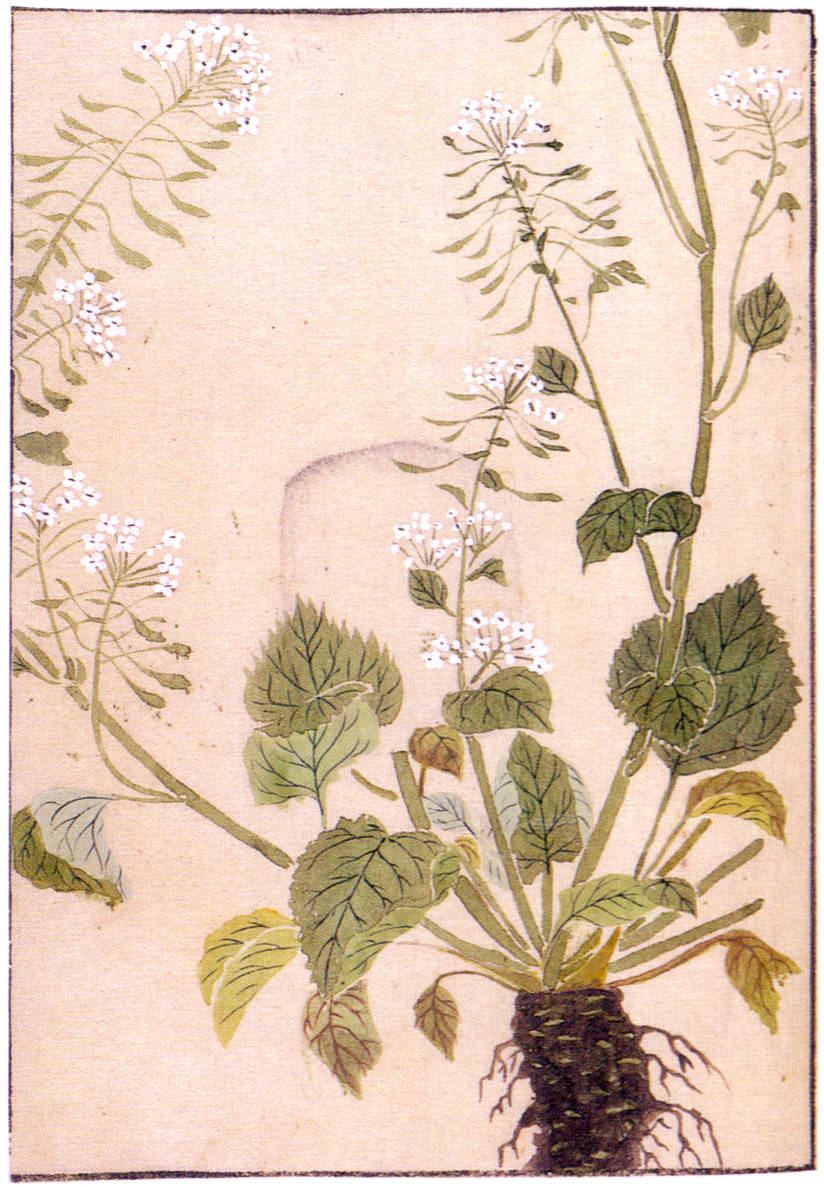
My favourite condiment here -Japanese horseradish, or wasabi - grows best in the stream beds of the nearby mountain valleys of central and northern Japan although these days the country has to import a lot to meet the high demand. Outside of Japan, what is often passed off as wasabi is in fact a mixture of regular horseradish, mustard and green food colouring which is much cheaper to produce and a lot less subtle. Traditionally the wasabi root was grated on a piece of dried sharkskin although these days ceramic is often used. Recent research has found a number of health benefits from setting your nasal passage on fire including anti-cancer, anti- inflammatory and anti-bacterial properties. So pile it on!

On the far side of the hemisphere Ellie's splint came off yesterday but it still may be a couple of months before she'll be cycling on it without pain.

Karuizawa, Japan
Pedalled: 48,416 km

Friday, 19 August 2011

70. Going solo

In the original plan, before Buddhist lucky charms had their wicked ways, Ellie and myself were to be joined by my cousin Mark in the first half of our Tour de Nippon, from Tokyo to Osaka via the Japanese Alps. A mysterious leg infection had already hospitalised Mark in Denver before Ellie and I had crossed the Pacific and he had to cancel his travel plans a few days before we were to meet. Two Sundays ago, Ellie and I loaded our bikes and followed Hiromichi and Yukiko, our hosts in the Shibuya area of Tokyo, who I had contacted through the Japan Cycling website and who had very generously put us up for several days and fed us all sorts of wonderful Japanese dishes, along the busy Roppongi-dori on our way out of Tokyo. Coming downhill beside Shibuya train station there was a moment of indecision about whether we could cross a junction and we all had to brake unexpectedly and Ellie's front pannier caught my rear while, twisting her front wheel sideways and sent her into an arc over the handlebars and down onto the road, breaking her fall with outstretched hands but still hitting her head, her helmet saving the brain surgeon from too much work. Unfortunately, however, bad news was confirmed in the nearby Ohashi hospital when the xrays taken of her arm revealed a radial head fracture near her left elbow. There was initial discussion about surgery being required but on subsequent visits the senior orthopedic doctor determined that a splint and possibly a cast for about a month followed by phyiscal theraphy treatments would be sufficient.

Yukiko and Hiromichi very generously gave us back their house key as they headed off on their annual holidays and in contrast to our first busy week applying for our Chinese visa and cycling all over central Tokyo, our second week was spent either reading, sleeping or watching one of the many DVDs on space exploration that Yukiko's friend had thoughtfully loaned to us. Both myself and Ellie feel qualified now to pilot any of the Apollo missions blindfolded. After a few days of discussing our options and doing battle with insurance companies, it was decided that rather than waiting here in Tokyo for Ellie's arm to heal while our recently issued Chinese visas were ticking away, Ellie would return home to sunny, riot-ridden England to mend for a month or two, while I continue on through Japan over the next month, before crossing into South Korea. I wonder what the Foreign Office travel advice would have been for England if the trouble were in another country!

And all because we failed to pay proper heed to the fortune that Ellie received at the Zojo-ji buddhist temple the day before the accident, that was largely very positive except with regard to travel, where it advised to "Try another time"!

Zojo-ji temple and Tokyo Tower in the background

Tokyo, Japan
Distance pedalled: 48,160 km

Sunday, 31 July 2011

69. To Tokio

Two days before we were due to fly out of Vancouver I checked my email and realised that we were flying out a day earlier than I had remembered, so our second last day in Canada turned out to be our last and was a little more frantic than expected, including a last minute discovery that my seatpost has rusted to the frame and couldn't be removed for the flight. With help from my family and a very patient and helpful Brian and Barry at the Local Ride bike shop in Maple Ridge, everything came together and with a few tears and a hundred hugs at 2 am in Vancouver airport we flew to Japan via China.

Arriving into Tokyo's Haneda airport on Saturday afternoon we found a quiet corner to build our bikes and pull our pannier's out of our Salvation army suitcase and hockey bag, whilst dripping with the newfound humidity. A couple of hours later we set off across western Tokyo's neighbourhoods to find Sparky, a friend of my cousin, who had generously agreed we could share his bedsit for our first couple of nights in Tokyo. Trying to negotiate Tokyo's side streets with a printout from an online map and compare street characters with the tiny print on the map was a little tricky and following the train stations was an easier task. The towering clouds that had continued to darken all afternoon were now lit up by occasional flashes of lightening as they threatened to unleash a deluge. Coupled with the fear of getting all our uncovered gear wet was the added concern of getting more radiation than we'd like. A recent email from a contact in Osaka who has been working on understanding the health impacts from the radiation that was released when the reactor melted down in Fukushima Daiichi after the March earthquake noted that it was extremely important to remain covered up if we were out in the rain. The rain held off however and by nine o'clock we had made it to Setagaya-ku and found the landmarks marking Sparky's place.

After unpacking and having a quick wash before beginning the sweating process again we were off in Sparky's miniature Mitsubishi negotiating the small lanes across the city to where his friend Shin had a restaurant and then began an incredible feast of Japanese cuisine, including sashimi, very fresh raw fished cut into slices. We were all home by midnight, our jet-lag catching up on us in the car on the way home and both myself and Ellie managed to sleep through the 6.4 earthquake recorded further north in the country at 4am and which had woken Sparky up as the shelves shook around us last night.


Beijing airport


Cycling in from Haneda airport to western Tokyo


Saki


Tokyo, Japan
Pedalled: 48,024 km

Thursday, 14 July 2011

68. The end of the Americas

Crossing the Golden Gate bridge as we said goodbye to San Francisco

While the blog has drifted off into the deepest, darkest recesses of the blogosphere, Ellie and myself have cycled north from San Francisco through northern California, Oregon, and Washington, into Canada. Vancouver marks the end of biking in Los Americas for us, an amazing journey that I began almost two years ago in Buenos Aires and which for the past nine months I've shared with Ellie, at first mostly ahead of her in the oxygen-deficient Andes and then the gravity defying trails of the Central American highlands, but more recently I seem to be the one trying to catch up. A few hidden bricks in her panniers will soon sort that out. Our slow race will recommence in early August, when we start out from Tokyo, Japan, and meander through Asia, where I plan to start blogging with a vengeance once again. Meanwhile we're taking some time off the bikes and heading for the Canadian Rockies with family.

Our only encounter with a bear occured along a busy stretch of Highway 101 in northern California where this young bear had been killed and left at the roadside. 


For days in northern California we cycled past and camped among the giant redwoods  


Pete had just arrived back from the Himilayas when he pulled us over
and asked us to stay the night in Arcata 

The Oregon coast 


Port Orford, Oregon 

Hemant from Jaipur, India, was cycling from San Francisco to Seattle 


From our first meeting on a beach in Baja California, we spent a
wonderful three days in Waldport with Suzen and Jaime 

We had a few soggy days in northern Oregon and across the
mighty Columbia River in southern Washington 

Riding on the Olympic penninsula in Washington state 

Independence day celebrations at Camp Runamok!

Mount Rainier

We took a series of ferries from Port Angeles (USA) to Vancouver Island
(Canada) and then back to mainland British Columbia and Vancouver city. 

 Horseshoe Bay

Wheat, potash and other resources arrive from the interior to Vancouver's port by rail 

Riding into Maple Ridge, 50 km east of Vancouver city, with Mt. Baker in the background.
Our last day biking in the Americas

Vancouver, Canada
Trip distance: 48,002 kilometres

Thursday, 2 June 2011

67. Cooking in the bicycle kitchen

Being back in an anglophone country seems to have eaten heavily into any reading and writing ventures. I picked up a copy of William Faulkner's The Sound and the Fury in a used bookstore in LA and I've read the first hundred pages several times already. Each time feeling like the first. The last entry in my journal was written exactly one month ago, the day before we left Mexico.

We reached San Francisco last Saturday afternoon, after fourteen days of cycling up the central Californian coast, our arrival into the city heralded by a downpour and a slippery descent through the rain soaked streets. My brakes seem to have developed an intolerance to wetness and I had to grind my bike shoes into the ground to slow a giddy Rocinante down as we rapidly approached a busy intersection at the bottom of the hill. Ellie's finely tuned new touring machine, a Surly Long Haul Trucker, coping much better with the conditions.

We're staying in the Mission district, the predominantly Latino enclave, with Rowan and Hanna. Rowan was one of my early cycling buddies, since we started going to school together twenty seven years ago. After spending the Memorial weekend having a look around the area, we began attending to some bicycle business. After almost three years on the road, Rocinante was in need of some TLC before we cross over to Asia later in the summer. A trip on the BART across the San Francisco Bay to Berkeley and we visited Neil at Cycle Monkey, the US distributor for Rohloff, who build the internal gear hub that I use. Neil's workshop is a cosy shed at the bottom of his garden and in a couple of hours he was able to replace the seals on the hub bearings that had been allowing oil to leak out as well as replacing all the internal and external cables on the Rocinante's Speedhub. Back in the Mission district I inquired in local bike shops about servicing several parts including the front hub and the bottom bracket, but all the hourly rates were about five days worth of traveling in most of the countries we've been through. I can do most of the tasks I need to do to keep Rocinante running smoothly but the more difficult tasks I have always tried to leave to the professionals or the ones who pretend to be. 

Most children develop their mechanical know-how as they follow older members of the family through the workshop, learning which tools to use where. Growing up I had a plentiful supply of tools and bikes to play with but the demolition of my grandfather's hand-built antique road bike and the subsequent failure at putting it back together again, seemed to instill a sense of caution rather than confidence when it comes to more complicated mechanical tasks. Then Rowan mentioned the Bike Kitchen earlier this evening and I rode over to their modern and well-stocked workshop a couple of blocks away. For a few dollars you get to use their tools and facilities and can rummage through their ample collection of spare parts. Bike savvy volunteers guide hip youngsters, single mothers and round the world cyclists in whatever task you have chosen to undertake for the evening. 
For an entree I decided on regreasing my front hub. I waited in line for a workbench to come free and then popped off the seals and opened up the bolts to reveal some pitted cone races and grease-starved ball bearings. There was initial hesitation when my mentor consulted his colleagues about the state of the cone races. It was agreed I could continue using them and I packed the bearings back with grease and then finished the more delicate job of ensuring the hub was not overtightened but also not loose. A few minutes later I left satisified with the job completed and happy that I understood a little more about what makes my bicycle go round. And I remember that man I met in a bike shop in Dublin shortly before I left who had laughed wholeheartedly at the proposal that I was going to cycle across Africa with only a hazy theoretical understanding of how to true a wheel and an even foggier one of how to build one. I guess we learn along the way.
San Francisco, USA
Trip distance: 46,080 km